

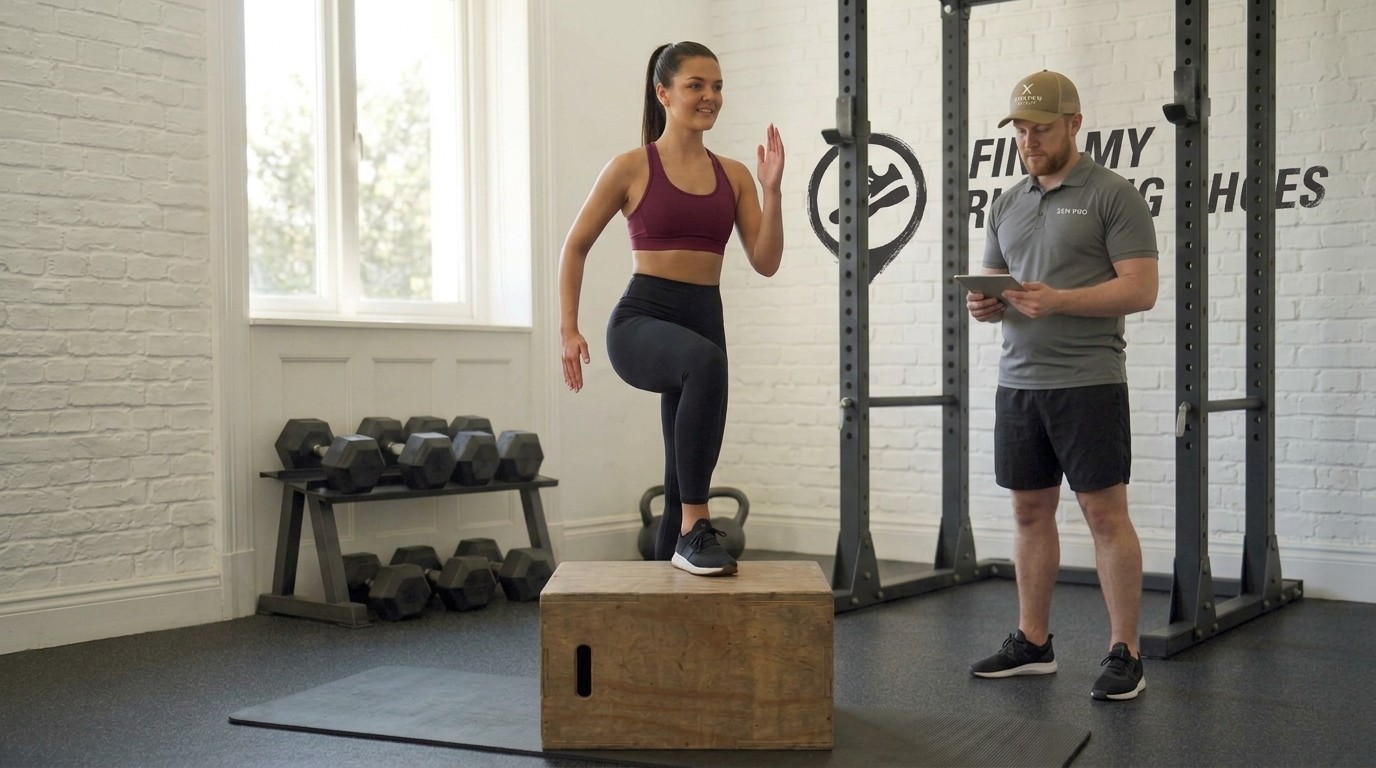

You roll your ankle on a run. You rest it, wrap it, and ease back in. Then a few weeks later, it happens again. If that sounds familiar, the ankle may not be the whole story. Hip strength and ankle sprains are more connected than most runners realize. The muscles in your hips help control where your foot lands and how steady your leg is on every stride. When they're weak, your ankle may end up taking stress it wasn't built to handle.
Rolled your ankle more than once? The cause may be higher up. Here's what research says about hip strength and ankle sprains, plus three gluteus medius exercises for runners.
How Can Hip Weakness Affect the Ankle?
In physical therapy, the site of the problem is not always the source of the problem. That's why we look at the whole kinetic chain, the connected system of foot, ankle, knee, hip, and core, when we evaluate an injury.
For foot and ankle problems, that chain often leads up the leg to the hips and core. That is why hip strength and ankle sprains are so closely linked.
Running makes this especially relevant. Every stride, you land on one leg and your hip has to keep your pelvis level and your leg lined up over your foot. If it can't, your foot may land in a less stable position, and your ankle has to make up the difference.
The site of the problem is not always the source of the problem. When evaluating an injury, look at the whole kinetic chain.
What the Research Says
Hip strength and ankle sprains often go together. A 2006 study of individuals with recurring ankle sprains found that their hip abductor muscles were weaker on the injured side than on the uninjured side. A 2020 systematic review of the research on chronic ankle instability came to the same conclusion, finding strength differences in not only the ankle, but in the hip and knee as well.
We know there is a connection between weakness in the hip and ankle instability, but does hip strengthening make a difference?
In a small randomized trial, 26 people with chronic ankle instability did four weeks of resistance-band hip exercises, three times a week. Compared with a group that did nothing, they improved their hip strength, balance, and most importantly, how they rated their own ankle function. A recent review pooled nine randomized trials and found that hip strengthening improved hip strength, balance, and scores on an ankle instability questionnaire, with the clearest gains when it was paired with ankle rehab.
Balance training belongs in the plan too if you've suffered from recurring ankle injuries. A 2024 review of 33 trials found that strength training, balance training, and the two combined all improved how people rated their ankle function, with the combination showing the biggest effect.
What this means for you. If you've had repeated sprains, think of hip strengthening and single-leg balance as a pair. Do the three exercises below, and add a simple balance routine:
Stand on one leg next to a wall or counter, with a soft bend in the knee, and hold for 30 seconds. Do 3 rounds per leg, 3 to 5 times per week. When that feels easy, make it harder one step at a time: close your eyes, stand on a folded towel or cushion, or slowly reach your other foot forward, to the side, and back.
Meet the Gluteus Medius
When we talk about hip strength for runners, we are focused on the muscles on the side of the hip. The most important of these muscles is the gluteus medius, or "glute med."
The glute med does two jobs:
- It steadies your pelvis when your foot is on the ground. This keeps you moving forward instead of wobbling side to side.
- It helps control where your foot lands. That placement is determined while your leg is swinging through the air, before your foot touches down.
When these lateral hip muscles lack strength, you lose control over both foot placement and leg alignment—forcing your foot and ankle to absorb the extra stress.
Pair Smart Footwear With Strength
A good shoe can improve comfort and support, but no shoe makes up for weak muscles or poor running form. (The research on support shoes is more mixed than the running industry often suggests.)
If you have a history of ankle sprains, choose a shoe that fits well and suits the way you run. Then do your part by building strength in your hips so your whole kinetic chain works together.
If you've had ankle sprains, combine well-chosen footwear with targeted hip strengthening so your kinetic chain works as a team.
3 Gluteus Medius Exercises for Ankle Stability
These exercises build strength and control in the side hip muscles. Try them 2 to 3 times per week.
1. Side-Lying Clamshells with Band

- Lie on your side with your knees bent at 90 degrees and a resistance band loop just above your knees.
- Keep your feet together and lift your top knee as high as you can without rolling your pelvis backward.
- Pause for 1 second at the top, then lower slowly.
- Volume: 3 sets of 12 reps per side.
2. Banded Side Steps (Lateral Monster Walks)
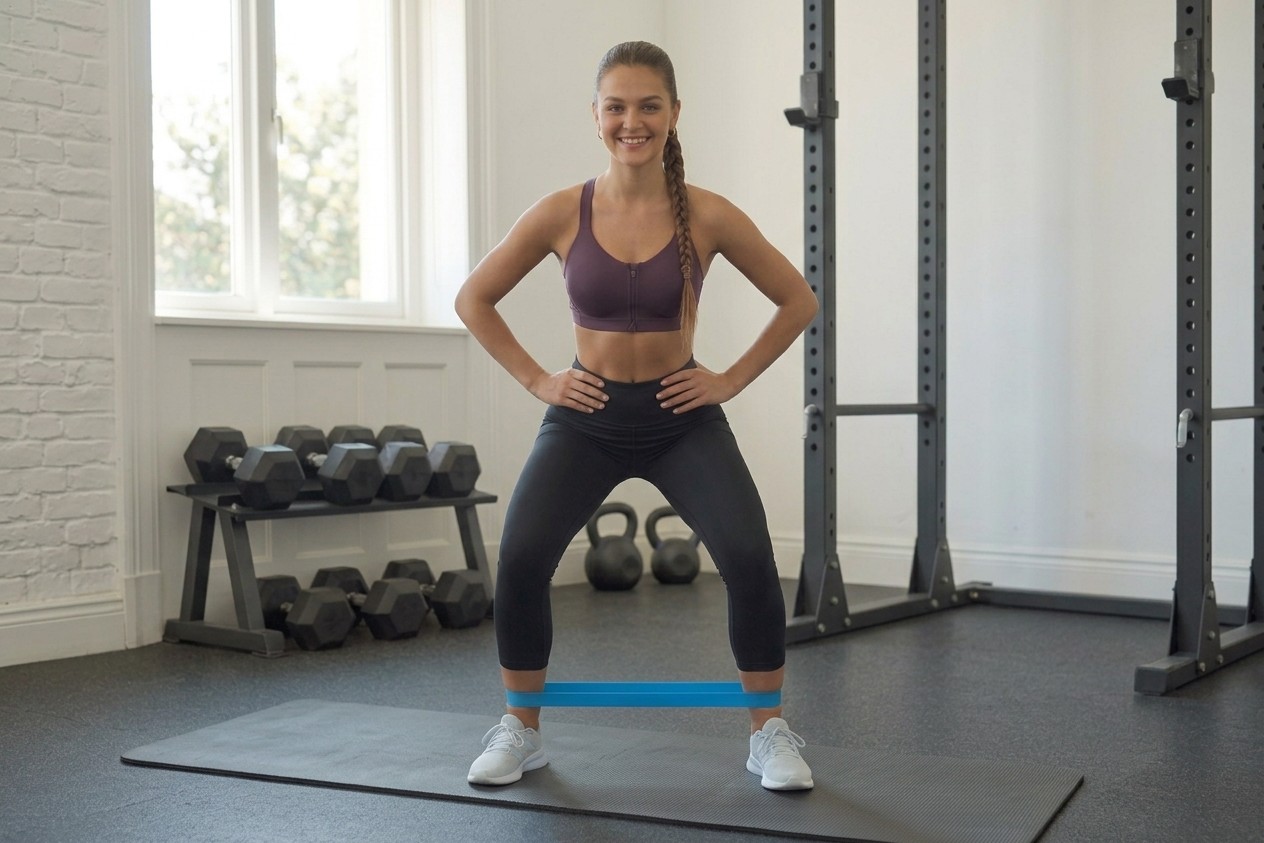
- Place a resistance band around your ankles (or above your knees for an easier version) and sink into a quarter squat.
- Step sideways with your lead foot, keeping tension on the band and your toes pointing straight ahead.
- Bring your trailing foot in with control. Don't let your knees collapse inward.
- Volume: 3 sets of 12 steps in each direction.
3. Single-Leg Runner's Step-Up with Drive
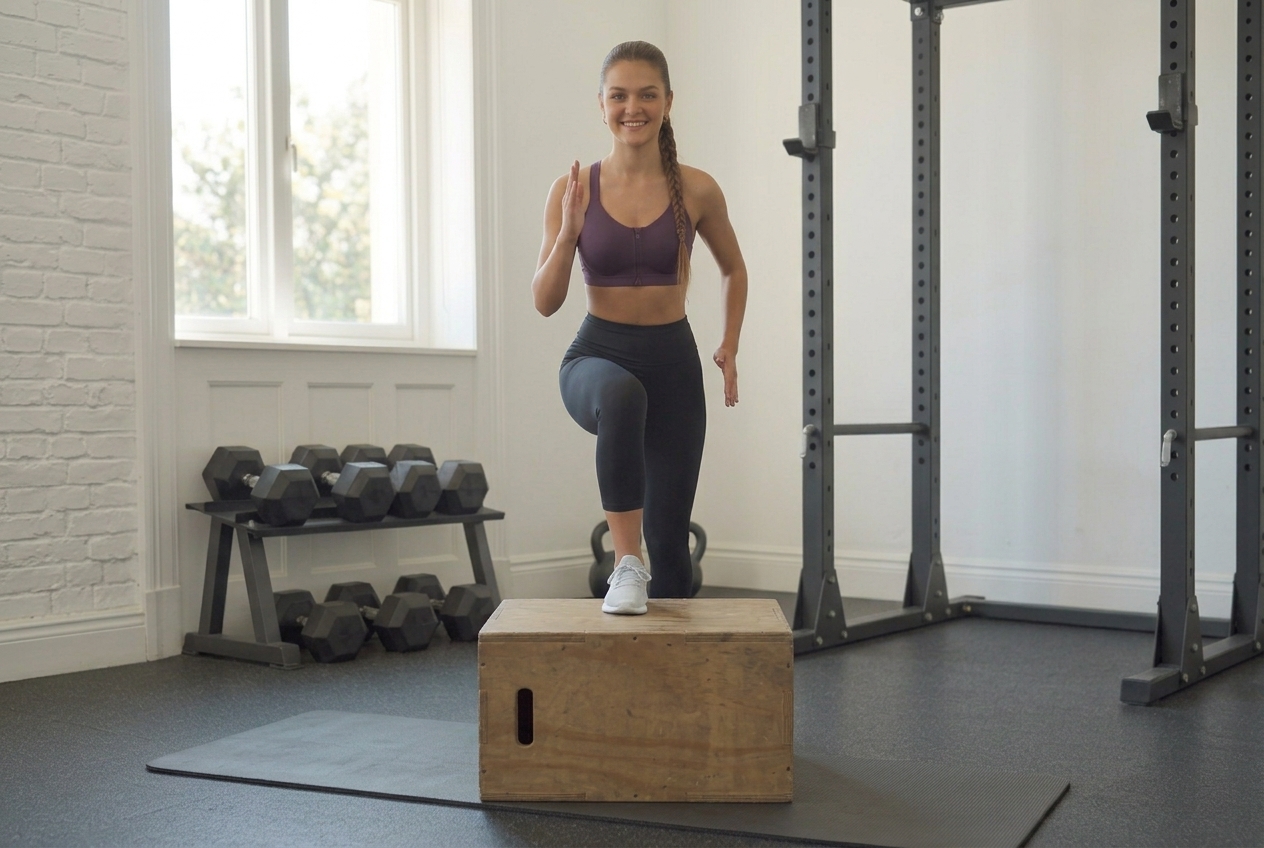
- Step onto a 12 to 18 inch box with your lead foot, pressing through the middle of your foot to stand tall.
- Drive your opposite knee up to 90 degrees while squeezing the glute of your standing leg to keep your hip and ankle steady.
- Pause at the top in a single-leg balance, then step down with control.
- Volume: 3 sets of 12 reps per leg.
Quality of movement matters more than load. If your pelvis drops or your ankle wobbles during step-ups, lower the box until your glute med can control the movement.
Stopping the Cycle of Ankle Sprains
Recovering from (and preventing) ankle sprains is a team effort between your body and your gear. Building hip stability ensures your leg stays aligned, while choosing the right running shoe provides the comfortable, supportive platform your feet deserve. When your hips are strong and your shoes fit your natural stride, you can hit the pavement with complete confidence.
Find Your Perfect Fit
Use our AI-powered process to discover shoes that match your unique comfort filter.
Start Your Fit Scan