

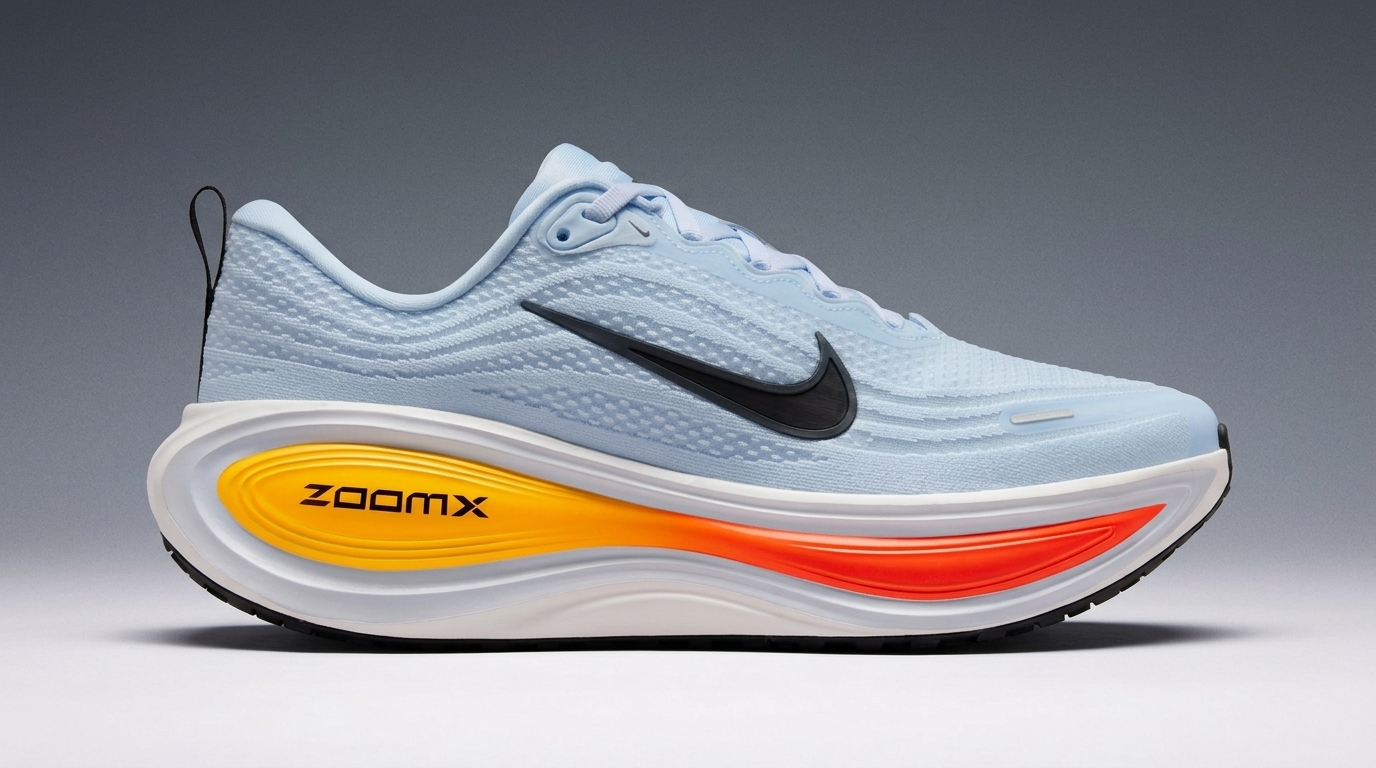

Running shoes have changed more in the last ten years than in the thirty before that. Foams that give energy back, uppers that are sprayed instead of stitched, and waterproof membranes that don’t feel like a boot are all on the shelf now. Used well, this technology can help you run faster, or just make every mile more comfortable. But the spec sheet reads like a foreign language: super foam, carbon rubber, engineered mesh, Gore-Tex. I’ve spent 25 years in this industry, so let me help translate what’s inside your running shoe. This article covers the basics so you can shop as a more informed runner and understand what each part of the shoe does for you. We’ll cover the three parts that matter most, starting from the ground up: the outsole, the midsole, and the upper.
1. The Outsole: Where the Shoe Meets the Ground
The outsole is the layer on the very bottom, the part that actually touches the ground. It provides traction, and it’s the part that has to hold up as all the miles add up. Outsoles fall into three groups, from pavement to dirt.
Road running: rubber only where you need it. Many road shoes put rubber just in the high-wear areas, like the heel and the forefoot, and leave the foam exposed elsewhere. That keeps the shoe light. The rubber itself comes in two main kinds. Carbon rubber is solid rubber with carbon added to make it tougher, so it’s firmer and heavier but more durable. Blown rubber is rubber expanded with air, so it’s lighter and cushier but wears faster. Shoes often combine them: tougher rubber where wear is heaviest, lighter rubber elsewhere. (Carbon rubber has nothing to do with the carbon-fiber plates in race shoes. This is just the rubber on the bottom.)
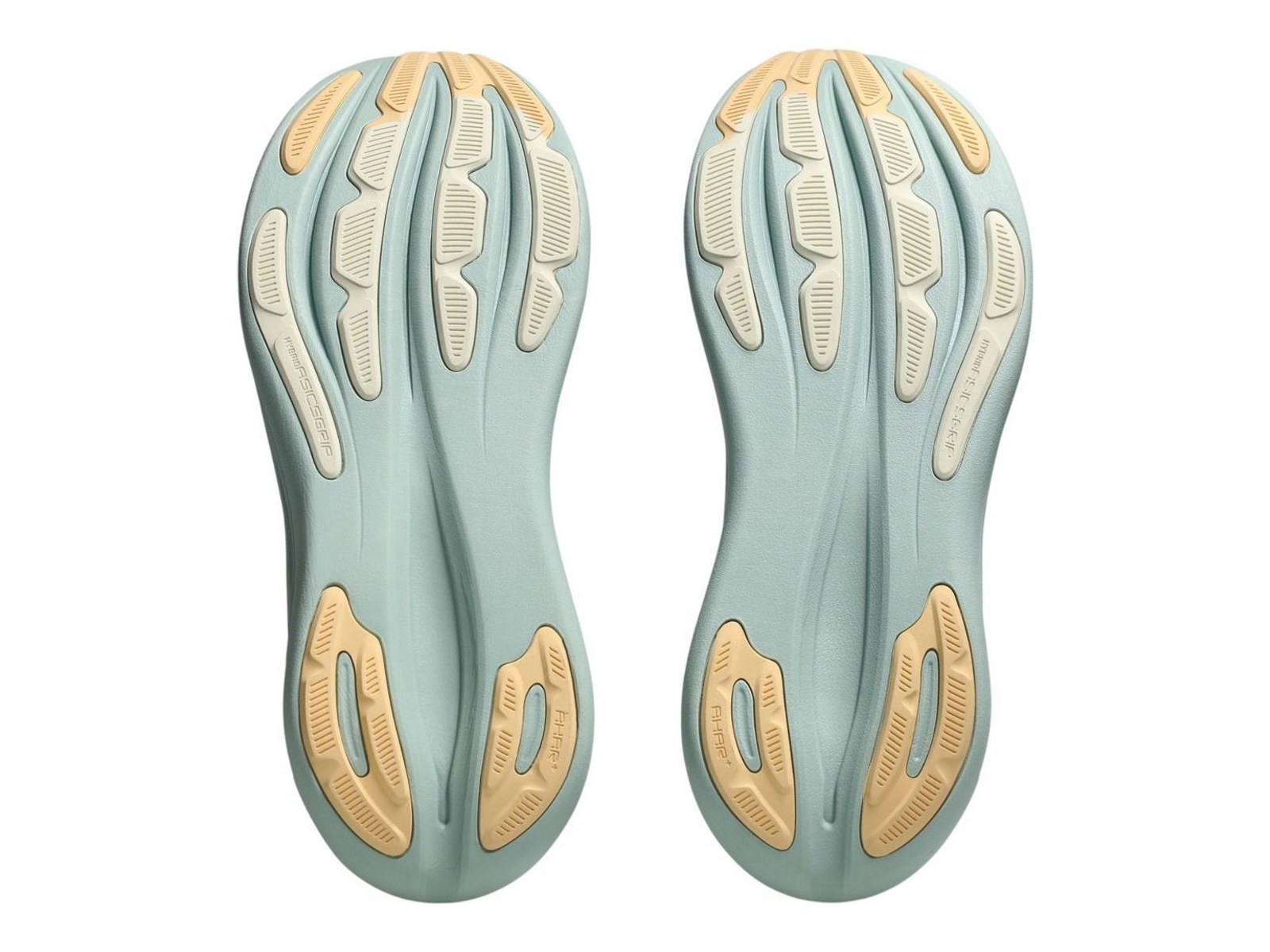
Road-to-trail: full rubber, minimal lugs. These shoes cover the whole bottom with rubber but keep the lugs (the raised knobs on the outsole) very low. You get a more durable outsole that can handle gravel paths and packed dirt, while the shoe still feels at home on pavement. Great for runners in an urban environment who want a versatile shoe.
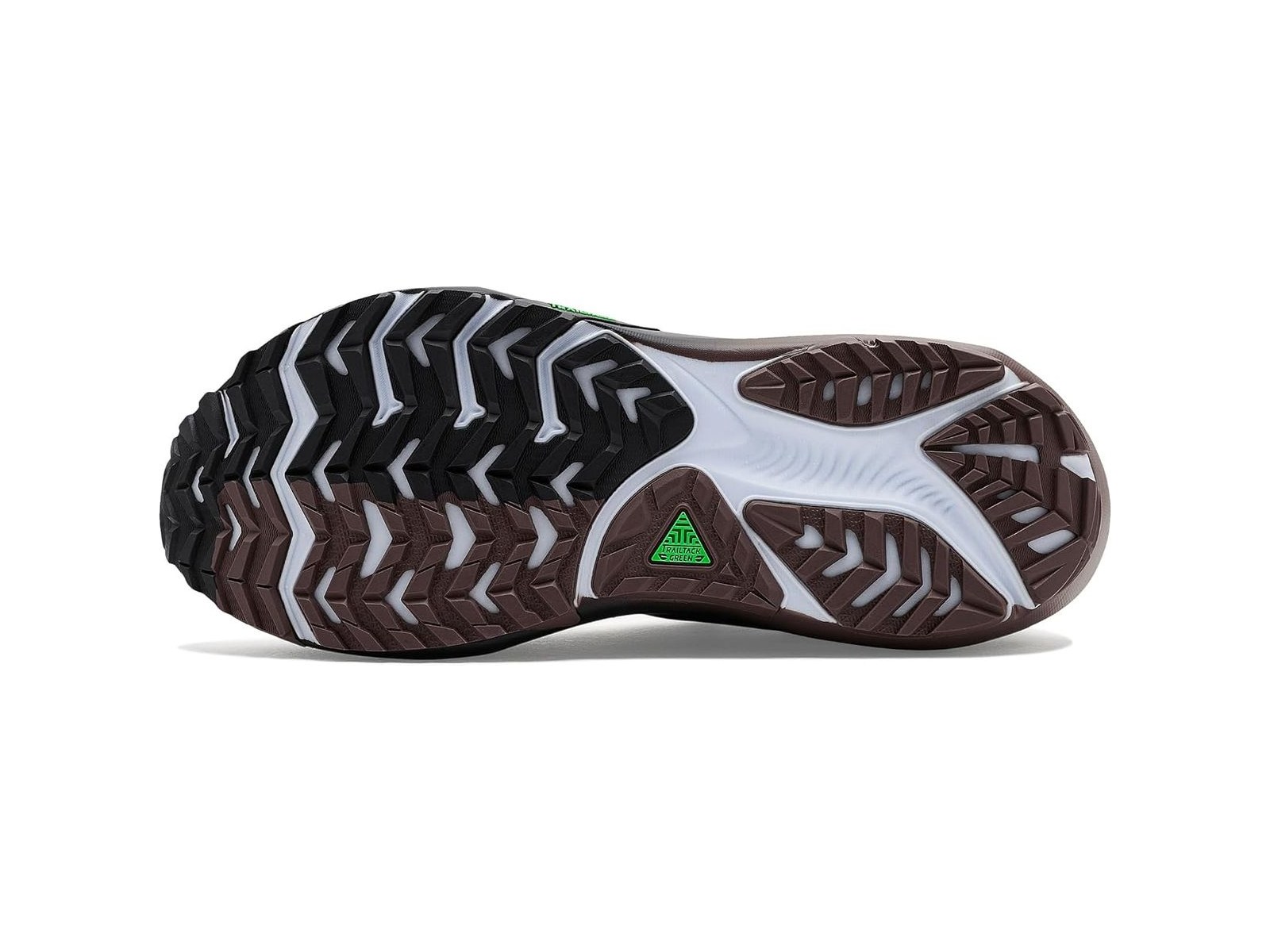
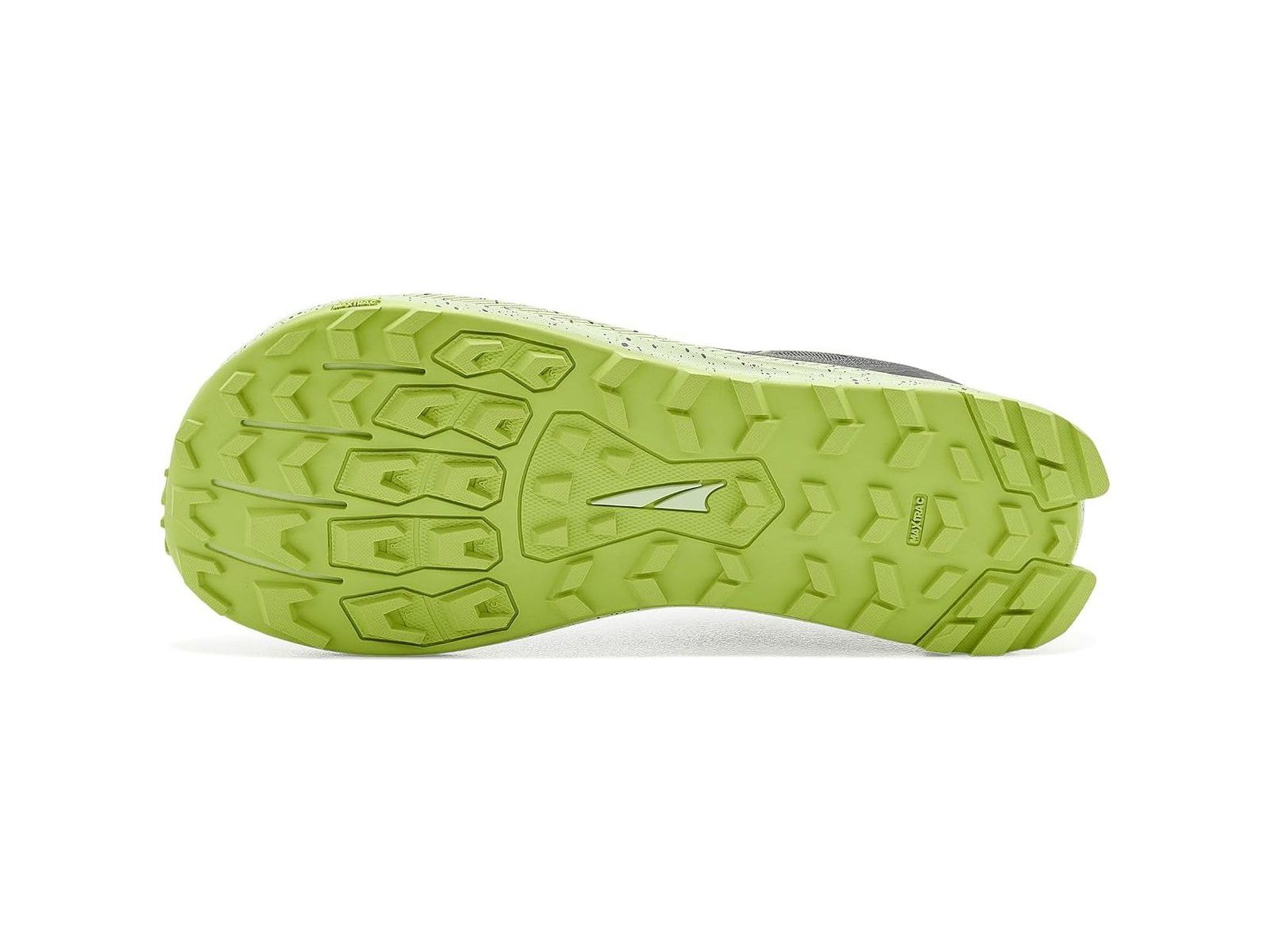
True trail: full rubber, aggressive lugs. A true trail runner has a full rubber outsole with aggressive lugs, roughly 3 to 5 mm deep, that bite into soft and uneven ground. Brands also look outside footwear for the rubber itself. Around 2010, the German tire maker Continental began supplying rubber compounds to adidas, starting with a trail running shoe. The pitch was to use tire know-how to improve grip on both wet and dry surfaces. Continental says the work started with a compound developed for wet-weather motorcycle tires.
Vibram: the name to know. If one name stands out in outsole rubber, it’s Vibram. It’s the biggest and most widely used outsole brand, and you’ll find its rubber on shoes from many different brands, road and trail. When you see the yellow Vibram octagon on the bottom of a shoe, it means the brand chose a name known for grip and durability. Whether I was at On, Saucony, or Columbia, Vibram was the quickest way to add authenticity to your product and get buy-in from retailers.
Popular shoes using Vibram today:
2. The Midsole: The Engine of the Shoe
The midsole is the layer between your foot and the ground. It absorbs the impact of each landing, and it affects how the shoe feels, how long it lasts, and what it costs.
Then: mechanical cushioning (mid-1970s to early 1990s). For years, brands tried to solve cushioning with engineered parts. Nike launched Air in 1978, ASICS launched GEL in 1986, and Saucony launched GRID in 1991. Underneath all of it, the foam was mostly EVA, a light, soft foam.
The shift: 2017. In March 2017, Nike introduced the Zoom Vaporfly Elite and Vaporfly 4%. Nike described the new foam as different from EVA. It was originally developed for the Breaking2 attempt to run a marathon in under two hours, and Nike says it has an 85 percent energy return. Energy return is how much of the energy you put into the foam comes back as spring. Foam stopped being filler and became the main event. Every major brand has been racing to catch up, and we’re in a foam space race today.
Here’s what you’ll see in product descriptions today, and why it matters:
- EVA: tried and true, and economical. It’s the long-time standard and the most affordable foam. The trade-off is weight and bounce. Classic EVA is denser, heavier, and less responsive.
- PEBA: the race-day foam (Pebax is Arkema’s brand name for it). It is extremely lightweight and gives back a lot of energy, which is why brands reserve it for high-end race shoes. The trade-off is a shorter shelf life, so it wears out sooner.
- TPEE: the everyday upgrade (Arnitel is Envalior’s brand name). A more affordable form of the high-end foams that brands are now bringing down into everyday shoes. The foams give high rebound and consistent performance, and last longer. Over 15 brands have adopted it.
The other big change: plates. Foam isn’t the only thing that changed. Nike’s Vaporfly paired its new foam with a carbon-fiber plate, and plates are now built into the midsoles of many shoes. Carbon fiber is the best known, but brands also use glass-infused plates, and many shoes add a rocker, a curved sole shape that helps roll you forward. Each one has real benefits and real trade-offs, so they deserve a full article of their own. I’ll cover them in a separate piece soon.
Pro Tip: Bouncier isn’t automatically better for you. Your body weight, your pace, and how often you run all change how a foam feels. A foam that’s perfect for one runner can feel mushy or harsh to another.
Examples to look for:
- EVA: Brooks Ghost (women’s)
- PEBA: Nike Alphafly (women’s)
- TPEE: New Balance 1080 (women’s)
3. The Upper: Everything Above the Midsole
The upper is the fabric that wraps your foot. We’ve seen a big shift in uppers since Nike introduced its first knit product, Flyknit, in 2012. Knit and engineered mesh uppers are shaped to the foot, with tighter weaves where you need support and open areas where you need airflow. Two of the biggest changes since then:
- On’s LightSpray: This upper isn’t knitted or woven. A robot sprays a single length of thermoplastic filament onto a mould, in one automated step, instead of assembling the 30 to 40 components a standard upper can have. On says a single 1.5 km filament is spun into a mesh-like upper that weighs just 30 g, the lightest upper it has ever made. The first On shoe to use it was the Cloudboom Strike LS, which launched in 2024 in limited quantities. It was amazing to watch the development of this really cool technology first hand.
- Gore’s Invisible Fit: The biggest change in waterproofing. It bonds the GORE-TEX membrane directly to the shoe’s upper material, which eliminates wrinkles and folds and reduces pressure points. Gore says the result is less weight, less water pickup, and faster drying, with a fit closer to a non-waterproof running shoe.
Examples to look for:
- Knit or engineered mesh: Brooks Glycerin (women’s)
- LightSpray: On LightSpray Cloudmonster 3 Hyper
- Gore-Tex: Nike ACG Pegasus Trail Gore-Tex (women’s)
What to Do With All This
Knowing what’s inside your running shoe is half the battle. The shoes I’ve pointed to here are examples, not recommendations. The right foam, rubber, and upper depend on your biometrics, preferences, and goals, and no article can know those about you.
That’s why we built the FMRS Fit Test. It scans your foot, factors in your body stats, injury history, and preferences, and matches you to shoes built for you.
What you run in Matters.