

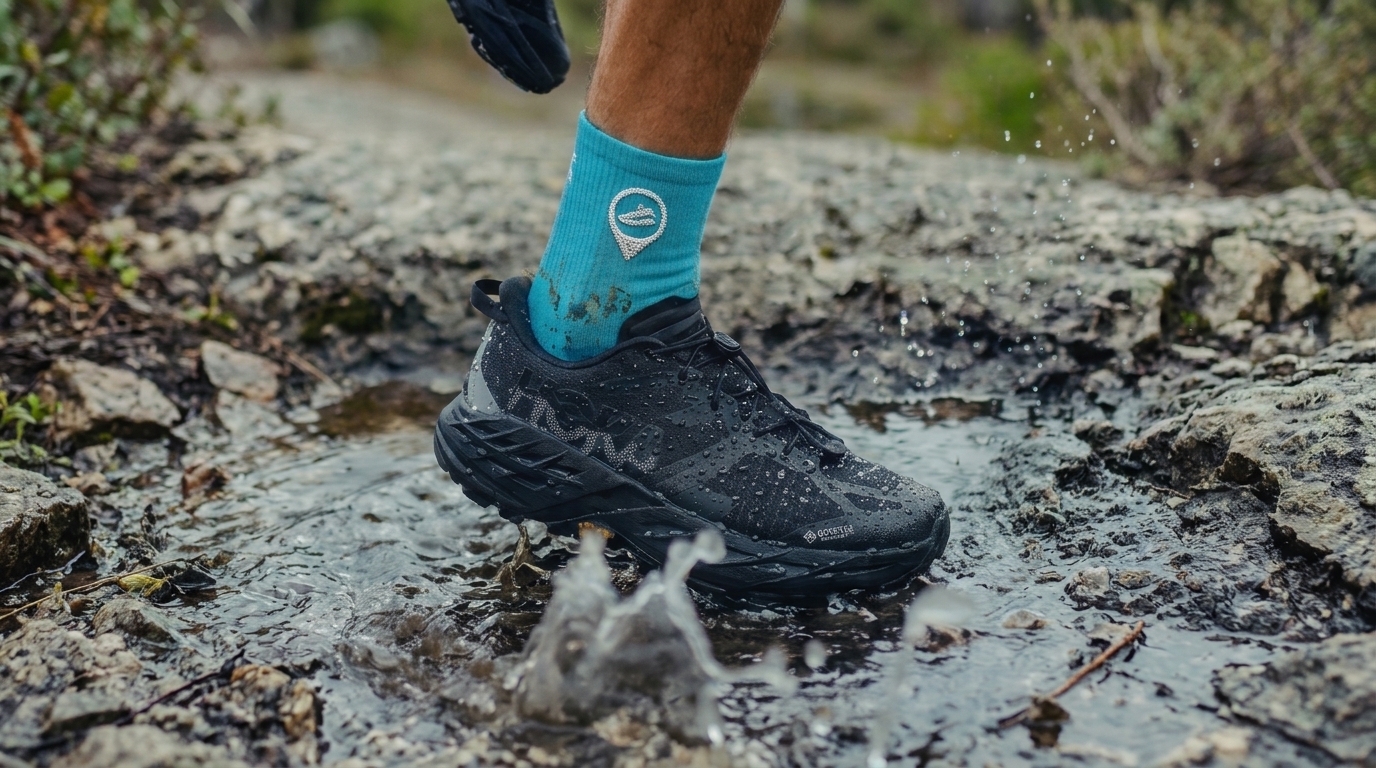

It’s that time of year, especially here in the Pacific Northwest, the footwear capital of the world, where it seems to rain almost every day and the roads and the trails are constantly wet. One of the big questions I’m asked when fitting people for running shoes as the weather turns is: Do I need waterproof running shoes?
Should you buy waterproof running shoes this winter? A running shoe fitter in the Pacific Northwest walks through the pros, the cons, new GORE-TEX tech, and water-resistant alternatives.
What’s New in Waterproofing Running Shoes
Most waterproof running shoes use a membrane, a thin layer that blocks liquid water but lets sweat vapor escape. GORE-TEX is the best-known, though many brands have their own proprietary versions.
Traditional GORE-TEX footwear uses a pre-formed bootie inserted during manufacturing. It works well for robust products like boots, where support and grip matter more than flexibility. For lightweight athletic shoes, that structure can be too much.
That’s why Gore developed GORE-TEX Invisible Fit. According to Gore, the membrane is bonded directly to the inside of the upper instead of sitting in a separate liner. The goal is a lighter, more flexible waterproof shoe, built for knit and mesh uppers like those on running shoes. A few of the recent updates using the new GORE-TEX Invisible Fit are:
Waterproof Running Shoes - Road HOKA Clifton 11 GTX (men’s | women’s)
Waterproof Running Shoes - Trail HOKA Speedgoat 7 GTX (men’s | women’s)
The Pros of Waterproofing Running Shoes
The pro is easy: it keeps your feet dry.
There’s one caveat. Every shoe has a big opening at the top where your foot goes in. If you step in a puddle deep enough that water goes over the collar, your foot gets wet anyway.
The Cons of Waterproofing Running Shoes
There are quite a few.
1. Slower drying. If water does get in, it’s trapped. A waterproof shoe takes much longer to dry out than a non-waterproof one. Membranes have improved at letting vapor out, but they’re still not as breathable as an upper with no membrane. 2. A stiffer feel. In my experience, waterproof shoes tend to be stiffer than their non-waterproof counterparts. Manufacturers have to attach the membrane to the upper material, often with adhesives, and once those harden, the shoe gets stiffer. 3. A snugger fit. In my experience fitting runners, waterproof versions fit slightly snugger. The membrane is another layer of material inside the shoe. A good example is the On Cloudsurfer Trail Waterproof (men’s | women’s) next to its non-waterproof trail counterpart (men’s | women’s).
If you decide to go with a waterproof running shoe, make sure you try it on first. The waterproof version can fit slimmer than the non-waterproof version of the same shoe.
For these reasons, many runners choose not to go with waterproof running shoes.
The Alternatives
First, it helps to know how shoe lines are built. A brand typically takes a road shoe and offers a trail version in two forms: one non-waterproof and one waterproof. The only difference between those two is the upper and the membrane. A great example is the Cloud Surfer Franchise from On:
- Cloud Surfer 2 (men’s | women’s)
- Cloud Surfer 2 Trail (men’s | women’s)
- Cloud Surfer 2 Trail Waterproof (men’s | women’s)
For this article, I want to compare a road shoe with its non-waterproof trail version. You can see the full list of road-versus-trail differences in my article What’s the Difference Between Trail and Road Running Shoes? Here I want to call out one: the upper.
Road shoes typically use some version of mesh, engineered to be light and breathable. On the trail, you’re dealing with dirt, rocks and twigs, and you want an upper that’s more durable and doesn’t catch debris. So some brands engineer a tighter weave or upgrade to a material with a tighter weave or higher tensile strength, like ripstop nylon, or use a second layer of material to prevent debris. A great example of this is the Brooks Ghost (men’s | women’s) and Ghost Trail (men’s | women’s) franchise.
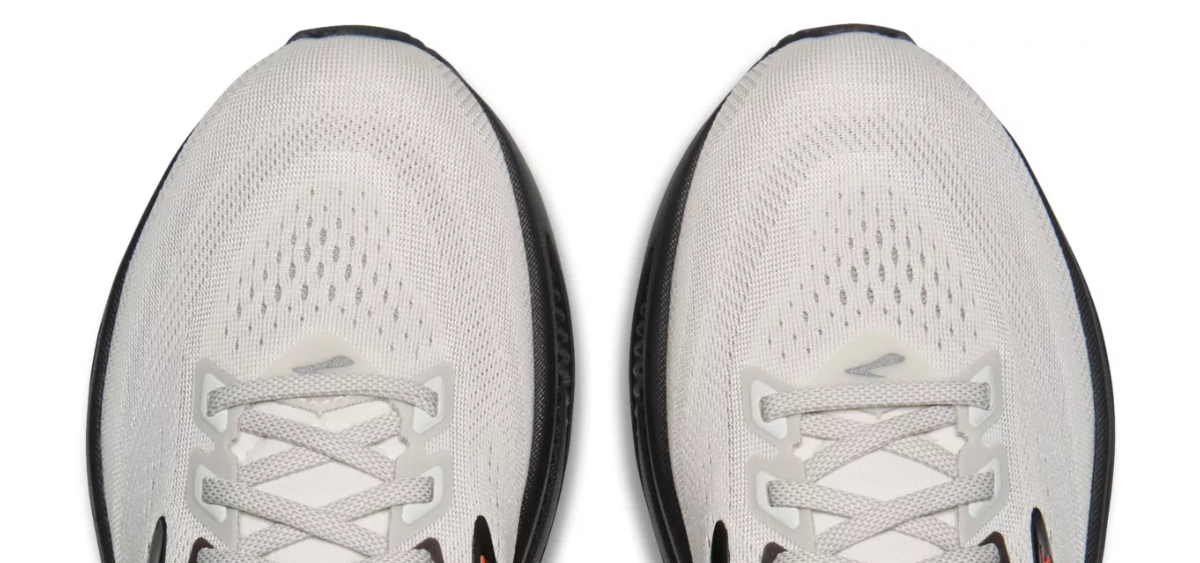
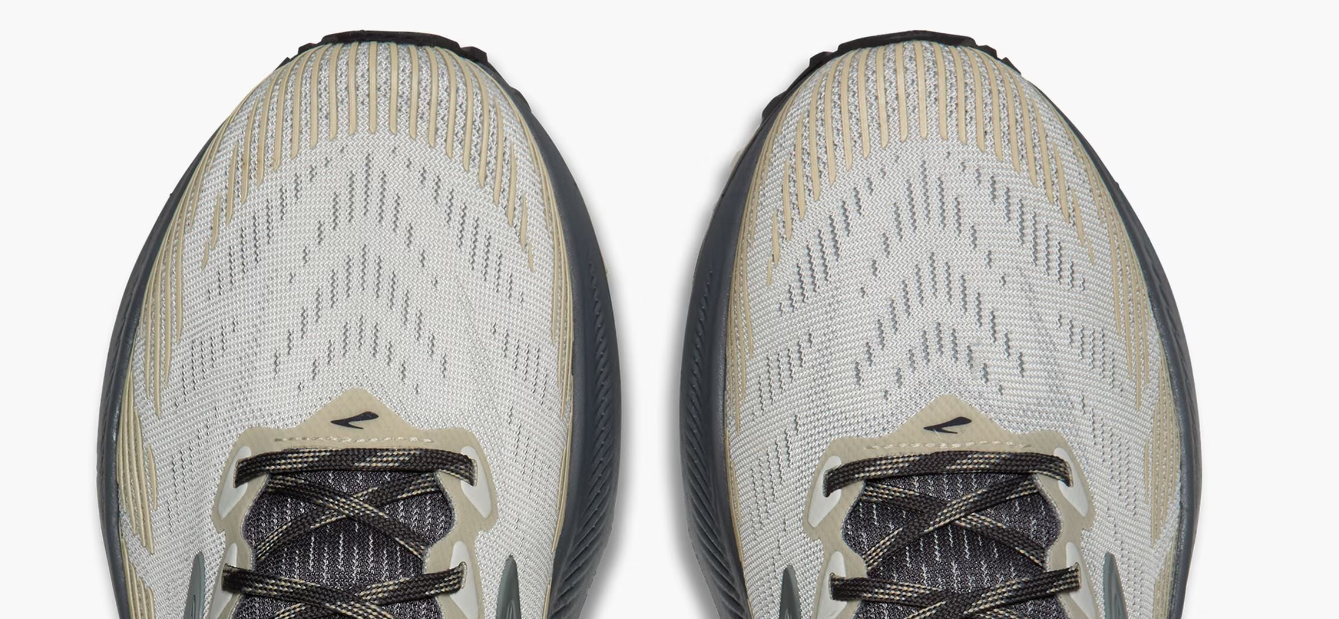
The benefit is that these materials are naturally more water-resistant. You get a trail version that isn’t waterproof but naturally has water-resistant properties.
So, to Waterproof or Not?
Hopefully you feel better equipped to answer the age-old question, do I need or want waterproof runnign shoes.
The shoes in this article are examples, not personalized recommendations. Your foot shape, your preferences and your goals all affect which shoe is right for you.
Still have questions about what shoe is best for you? Stop guessing. Get your foot scanned and take our Fit Test, all from your phone. We’ll recommend 3 shoes and let you compare prices with live inventory from top retailers.
What You Run in Matters.
Get Matched to Your Shoe
Get your foot scanned and take the FMRS Fit Test, all from your phone, and compare prices with live inventory from top retailers.
Take the Fit Test