

There are a few key mistakes people make when buying running shoes, but one really stands out. After 25 years in the industry, I’ve seen the same pitfalls over and over. I’m sharing them so you can be better educated when you buy your next pair. Here’s the countdown to the biggest one.
A 25-year industry insider counts down the 4 biggest mistakes people make when buying running shoes, from choosing on color to wearing one pair for everything.
#4: Choosing on Color and Aesthetic
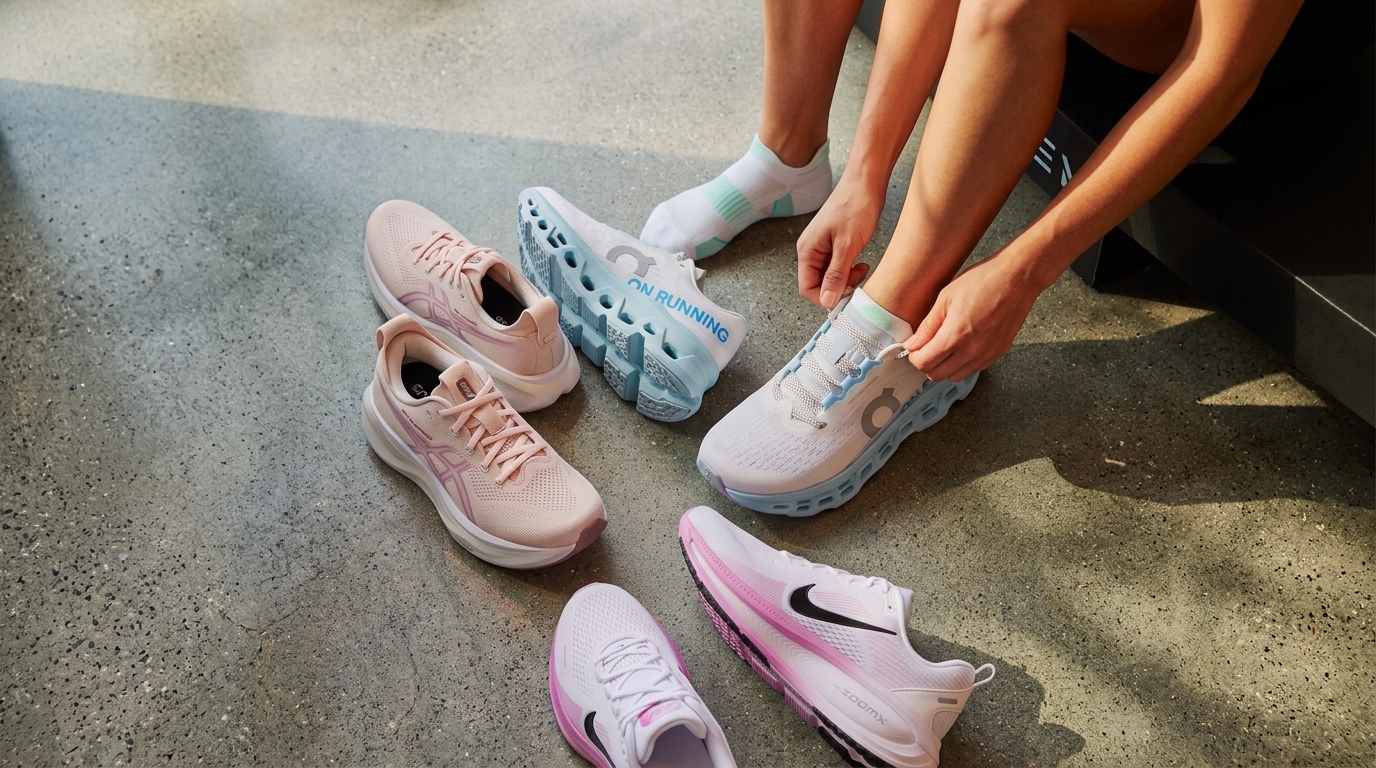
When I worked at Saucony, we felt it was a badge of honor to wear the product. The shoes were so comfortable, but they were so ugly only real runners would wear them. The good news is that thanks to brands like On and Nike, you often don’t have to choose between aesthetics and performance.
Still, don’t let looks overrule feel. Comfort is one of the strongest signals you have when choosing a shoe, a point Dr. Isaac Cowart breaks down in Do Shoes Prevent Running Injuries?
Close your eyes when you try on shoes. Put a different shoe on each foot and let your body tell you which feels better.
#3: Relying on Reviews and Referrals
Buying shoes is not like buying a washing machine. Five-star reviews and a friend’s suggestion work for appliances, but not for shoes. If you’re 125 lbs with a narrow foot and your friend is 160 lbs with a wide foot, their review of a shoe is largely irrelevant to you. Review sites that boast multiple five-star ratings are one of the key problems we set out to address, and one of the main reasons FMRS exists.
Always go for the shoe that works for you. It’s not just about size. A shoe has to match your width (how wide your forefoot is), your arch, and how you move. When you take our Fit Test, we show you only reviews from people with similar biometrics (weight, foot shape, and so on), preferences, and goals.
We recommend getting measured once every two years, and sooner if you’re recently pregnant or have had a significant weight change.
#2: Buying Only One Pair to Run In
I know what you’re thinking: this is an article to convince you to spend more money. We do make a small commission on shoes you buy, but our focus is always education. I hope you found our website because you know we back things up with facts and science rather than cheap tricks and marketing ploys.
One of the strongest shoe-related findings for injury prevention isn’t about which shoe you buy, but how many you use. A 2015 prospective study found that rotating between multiple pairs was associated with a 39% lower risk of injury than running in the same shoe every day, likely because each shoe loads your muscles and joints slightly differently.
For example, the On Cloudmonster 3 (men’s | women’s) and the HOKA Bondi 9 (men’s | women’s) ride very differently from each other. These are examples, not personalized recommendations.
#1: Using One Shoe for Running and Everyday Wear
Running shoes have a shelf life of 400-600 miles, or 4-6 months for the average runner. It also depends on the shoe type, your biometrics, and the foam. If you wear your running shoes for daily life, that number likely drops to 2-3 months. What’s more, it’s very difficult to track your mileage when a shoe doubles as an everyday shoe. (See our article on when to replace your running shoes.)
Want an easy way to track it? At FMRS, we take the information you provide in the Fit Test and run it against your individual shoe, then alert you when it’s time to replace it.
Use your running shoes for running only. Mileage is easy to track, and they’ll last 2-3x longer.
The Bottom Line
None of the mistakes people make when buying running shoes is about picking the “wrong” brand. The right shoe depends on your body, your preferences, and your goals, which is why we don’t name a “best” shoe in our articles. The examples above show what to look for, but you still need to be properly fit.
Take the FMRS Fit Test and get matched to shoes built for your feet. What You Run in Matters.
Get Matched to Your Shoe
Take the FMRS Fit Test and find shoes built for your feet, your preferences and your goals.
Take the Fit Test